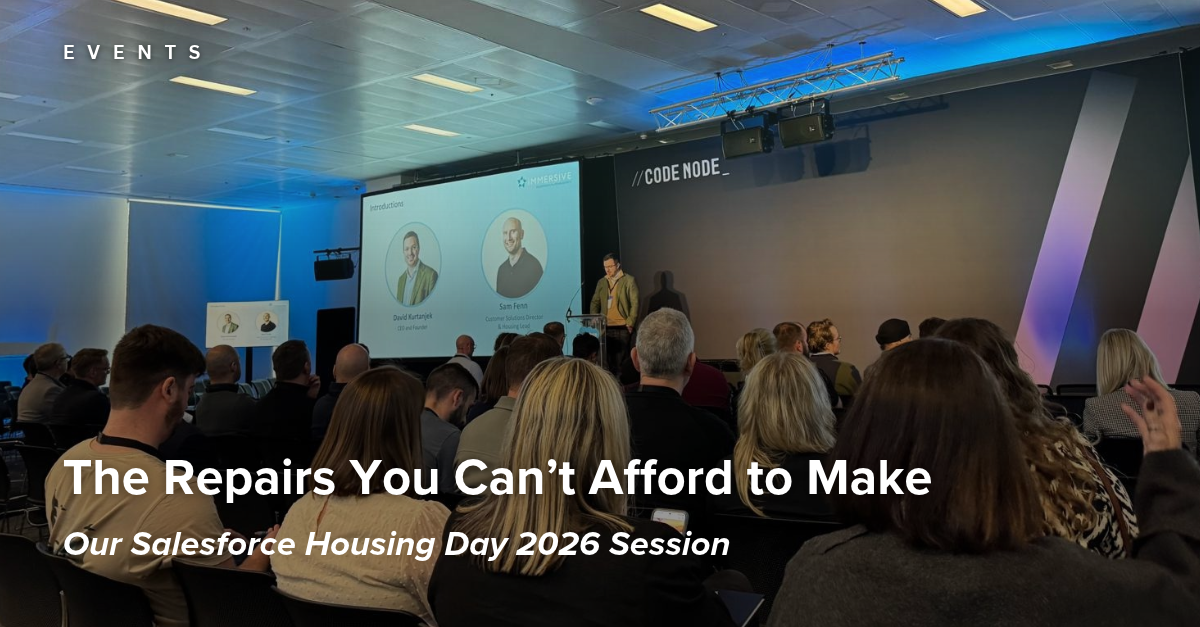
Salesforce Housing Day 2026 brought the social housing sector together at CodeNode to explore how data and AI can deliver better homes and better services. As proud Gold Sponsors, team iMMERSIVE spent the day in the Partner Village, hearing the challenges and ambitions housing teams brought to our stand.
Our session, ‘The Repairs You Can’t Afford to Make’, was led by David Kurtanjek, CEO and Founder, and Sam Fenn, Customer Solutions Director & Housing Lead. It showed how bringing resident, home and asset data together on Salesforce changes the way repairs are run.
Housing associations spent £10bn on repairs and maintenance in 2024-25, up 13% in a single year. Only 35.5% of tenants are satisfied with how their complaint was handled.
The costs hiding in your data
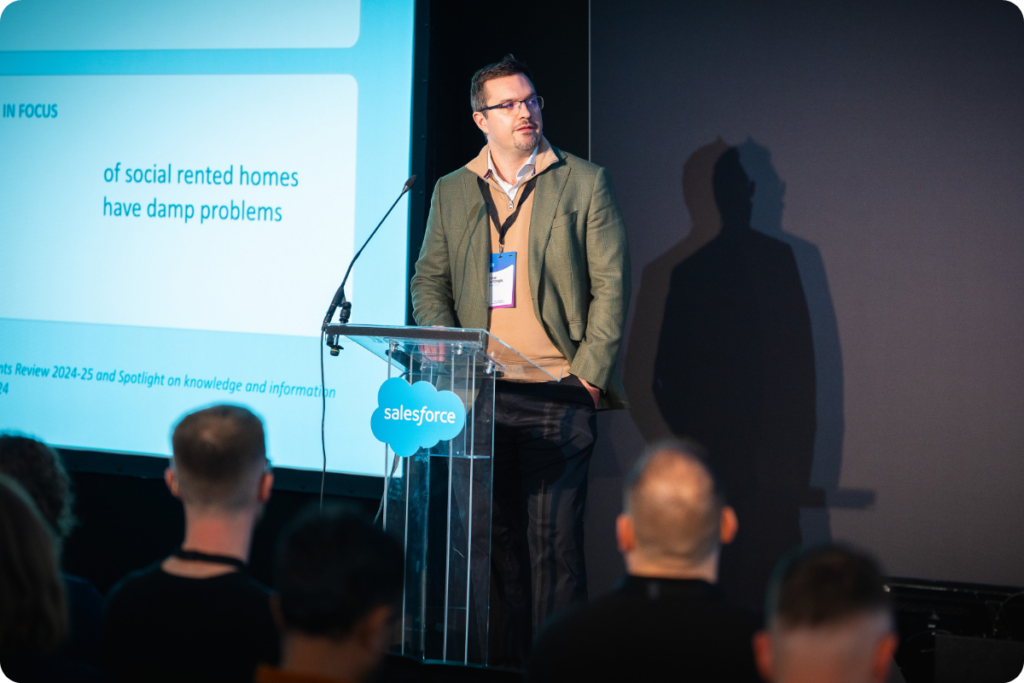
While inflation, regulation and building safety works will push repair bills up whatever a housing provider does, the costs that come from poor records, guesswork on stock condition and repeat visits are a different matter. That’s because they’re avoidable.
The Housing Ombudsman found poor records at the heart of two in three upheld repairs complaints, and the reason is familiar to most housing teams. With repairs, complaints, surveys and capital plans spread across different systems, nobody sees the whole picture of a home, so residents end up telling their story again and again.
Awaab’s Law is the starting point, not the finish line
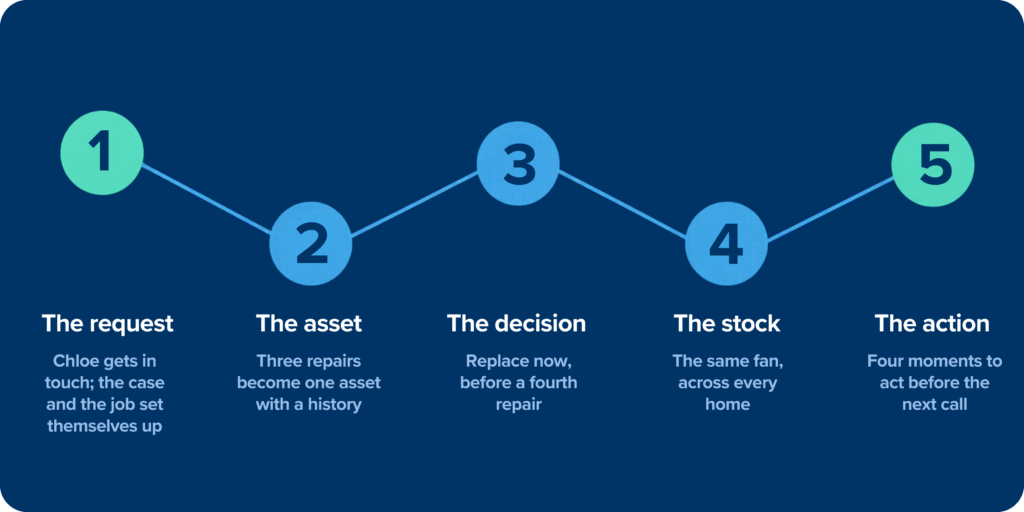
David and Sam’s argument was that compliance should be a springboard, not a knee-jerk reaction. They walked through one illustrative case: a resident reporting mould for the fourth time, with a four-year-old at home.
The request.
However she gets in touch, her case lands in one place. She’s recognised before anyone answers, her history is already on screen, and the call is transcribed and routed automatically. She tells her story once.
The asset.
In most organisations, the first three visits are three separate job numbers. Linked to the extractor fan they belong to, the picture changes. It’s already cost twice as much to repair as it would to replace.
The decision.
The replacement is priced from a live schedule of rates. The recommendation arrives in seconds, before a fourth visit, and the Awaab’s Law clock starts itself.
The stock.
That fan isn’t a one-off. A Tableau view across the whole stock shows the same model ageing in thousands of homes, many already past their expected life.
The action.
Four moments turn asset data into planned work:
- Before the resident calls: sensors raise the case automatically, and visits are prioritised by vulnerability.
- When the plan is set: replacements are batched by area, not chased one by one.
- When the home is empty: ageing components are replaced between tenancies, saving a separate visit.
- When the money is spent: bulk purchases are backed by contractor performance data.

Compliance, built in
Awaab’s Law, Housing Health and Safety Rating System (HHSRS) and the new Decent Homes Standard all ask for the same thing: evidence. The Ministry of Housing, Communities and Local Government (MHCLG’s) policy statement on the new standard says that from 2035, homes will be judged on the condition of their components. When every request, repair and visit is tied to the asset, that evidence builds as the work happens, not in a spreadsheet afterwards.
One trusted record, shared across the organisation

For the resident, no repeating her story, no chasing, one visit that fixes it properly.
For housing providers, bringing everything onto Salesforce creates one trusted record of every resident, home and asset, shared by the contact centre, repairs team and capital planners. It’s not either-or. With the right data in one place, you can save money, stay compliant and look after residents at the same time.
Put your repair data to work
The data to stop the fourth repair usually already exists, it just sits in too many places to act on.
Team iMMERSIVE helps housing associations change that, bringing residents, homes and assets onto one Salesforce platform so every repair decision is backed by evidence, not guesswork. Get in touch and let’s put your repair data to work.